Safety Guidelines
The freedom of riding together is earned on every single ride out. It lives in a helmet strapped on tight, a safety distance respected, a hand signal everyone understands. These aren’t rules to kill the fun — they’re the ones that get all of us home together.
Mandatory gear
Before you start the engine, you’re covered — in every sense of the word.
- Approved helmet, strapped on. Always, even for 500 metres.
- Gloves, long-sleeved jacket, trousers, closed boots covering the ankle.
- Reflective elements whenever visibility drops — night, rain, fog.
- Bike in order: valid roadworthiness check, valid insurance, readable plate.
Pre-ride checks
Five minutes of checks before you leave beat an emergency stop at 100 km/h.
- Tyre pressure and condition.
- Oil level.
- Lights, indicators, brake light — all working.
- Full tank, or enough to reach the first planned stop.
- Papers in order: licence, insurance, registration, membership card.
- One last look round: panniers closed, side stand up.
Riding rules
The group’s speed is set by the most careful rider — never the one in a hurry.
- Traffic rules and speed limits respected, adjusted downward on wet roads.
- Safety distance: two seconds minimum from the rider ahead.
- Low-beam headlight on at all times, day and night.
- Staggered formation to see and be seen.
- Steady line through corners — no closing the gap, no showing off.
Group riding conduct
We ride together, but every rider stays in charge of their own bike.
- Everyone manages their own riding, without blindly following the bike ahead.
- No sudden braking, no accelerating to “get back in position” out of a corner.
- Nobody overtakes the Road Captain unless they’ve called it.
- What you spot, you pass on: an obstacle, a speed camera, a pothole — the signal travels all the way to the back.
Group / convoy structure
A convoy isn’t a mob. It’s a formation, with clear roles.
- The Road Captain leads, the Tail Gunner closes the ride — nobody passes either one.
- Everyone keeps the position assigned at the start, for the whole ride.
- Big group = sub-groups, each with its own captain.
- At junctions and fuel stops, the group regroups before moving on — nobody gets left behind.
Signals & communication
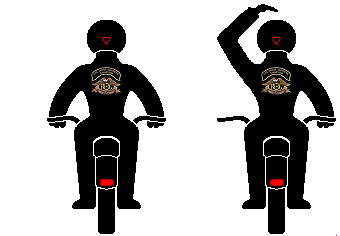
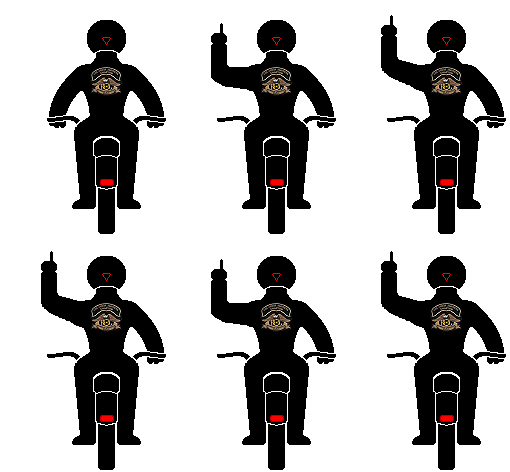
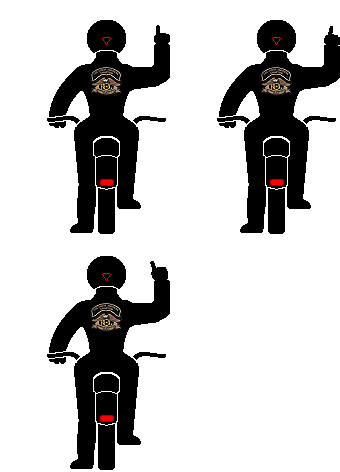
The engine drowns out your voice. Your hands speak for you — as long as everyone speaks the same language.
Direction
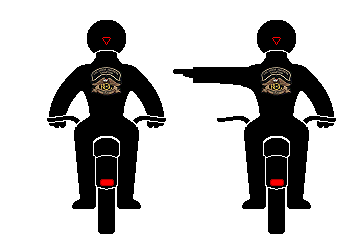
Formation
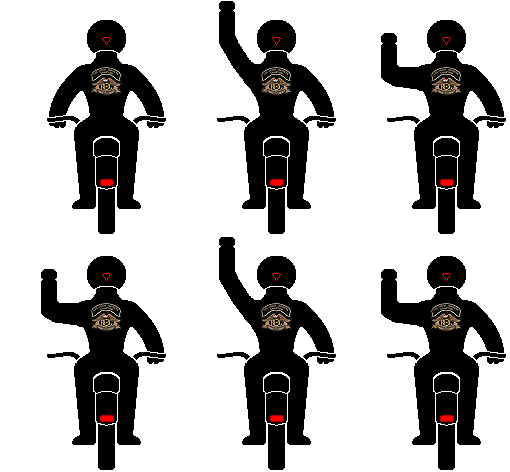
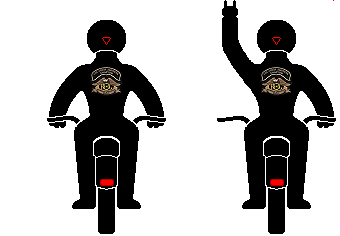
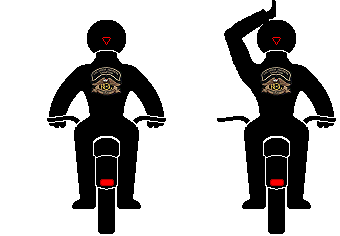
Speed & stop
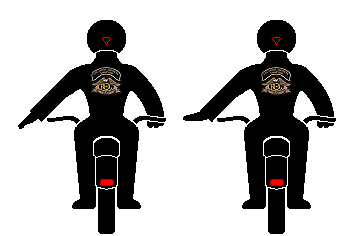
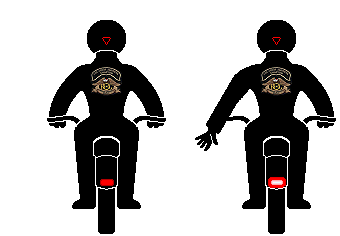
Hazard
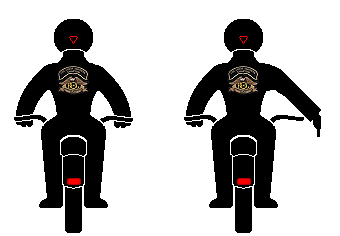
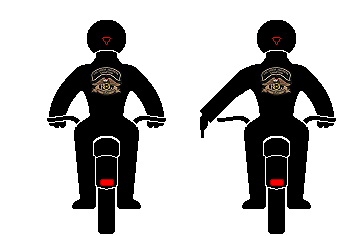
Signal received, signal relayed: every rider passes it on to the one behind, all the way to the back of the line.
Emergency procedures
A crash or breakdown happens sometimes. Panic never should.
- Crash or breakdown: signal it (hazard lights) and get clear of traffic.
- The convoy stops at the next safe point — never on the hard shoulder unless absolutely necessary.
- Don’t improvise first aid beyond your training: call 112.
- The Road Captain and Tail Gunner coordinate what happens next — follow their lead.
Every member is responsible for their own actions during rides. Riding with the Chapter means being able to control your bike, find your way, follow the road officers’ instructions, and respect traffic law at all times.